



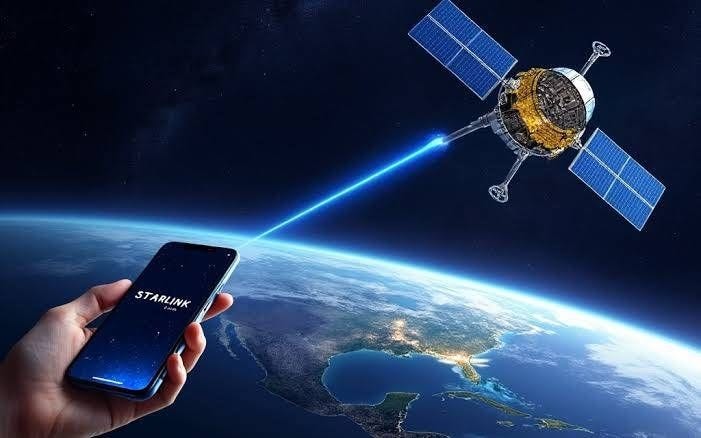
For millions of people across Africa, the internet is no longer a luxury. It can mean access to education, customers, banking, information and work. But what happens when the nearest fibre cable is too far away, or the mobile network simply does not reach you? This is where Starlink enters the picture. starlink web
Instead of waiting for cables and towers to reach every community, Elon Musk’s SpaceX is taking internet connectivity into the sky using a growing network of satellites in low Earth orbit.
Across Africa, the idea is gaining ground. By June 2026, Starlink was commercially available in 26 African markets, with about 300,000 customers on the continent. But the numbers also tell another story: Nigeria, Zimbabwe and Zambia account for roughly 64% of those subscribers.
So Starlink is growing. But can it grow into a mass-market internet service for Africa? space in Africa
The promise is simple

Starlink’s biggest advantage is not necessarily that it is faster than every other internet service. It is that it can reach places where traditional infrastructure struggles. A fibre network requires infrastructure on the ground. Mobile internet depends on network coverage and other infrastructure.
Satellite internet takes a different route. The connection comes from space. That could make Starlink particularly useful for remote schools, farms, businesses, health facilities, lodges and communities where building traditional broadband infrastructure is difficult or expensive.
And the performance can be impressive. Across the African markets where Starlink operates, median download speeds have exceeded 100 Mbps, according to a June 2026 analysis based on Starlink and PeeringDB data.
But there is a problem. Connecting people is one thing. Making the connection affordable is another.
The price question
Starlink is not simply a monthly internet bill. There is usually an upfront cost for the equipment, followed by a monthly subscription. Take Kenya as an example. Starlink currently lists Residential Lite at KES 4,000 per month, while its standard Residential plan is KES 6,500. Hardware is an additional upfront cost. starlink Kenya
In Nigeria, Starlink lists residential service from NGN 57,000 per month, with hardware starting from NGN 318,000 in selected areas.
These prices do not automatically make Starlink expensive. That depends on what consumers are getting and what alternative internet services cost in the same market. And this is where the African story becomes complicated. Nigeria starlink
Better internet does not always mean cheaper internet
For someone living in an urban area with affordable fibre or strong 4G/5G coverage, Starlink may offer little reason to switch. Why pay for satellite equipment when a cheaper local connection already works?
But for someone living far from reliable broadband infrastructure, the calculation is different.
For that person, Starlink may not be competing with fibre. It may be competing with no reliable internet at all. That is where Starlink’s real opportunity in Africa may lie. Not necessarily replacing existing internet providers but filling the gaps they cannot economically reach.

Africa is not one market
The numbers already show this. Starlink has grown rapidly in some countries while remaining relatively small in others. In Kenya, for example, its estimated share of the local ISP market was still only around 0.9% as of the June 2026 analysis.
That tells us something important.
Starlink’s success will not be determined by technology alone.
It will depend on income, competition, regulation, infrastructure and, perhaps most importantly, affordability. There is another challenge: capacity. As more people subscribe in the same area, network congestion can affect performance. Some African markets have already experienced capacity constraints and waiting lists.So even an internet service that comes from space still has a very earthly problem:
How many people can it serve at once?
And what about Tanzania?
If Starlink expands further into Tanzania, the important question should not simply be:
“Is Starlink fast?” We should ask: Who can afford it?
Would it make sense for a household in Dar es Salaam that already has fibre?
So, will Starlink succeed in Africa?
The evidence suggests there is a real market for it. It has already expanded across dozens of African markets and attracted hundreds of thousands of customers. But success should not be measured only by how many satellites are above Africa.
It should be measured by how many people below those satellites can actually afford to connect. Starlink may solve one of Africa’s biggest connectivity problems: reach. But it still has to solve another:
affordability.
Because the future of African internet access may not depend on whether the technology can reach the most remote village. It may depend on whether the people living there can afford to use it.
The internet may be coming from space. But the question of who gets to use it remains firmly on the ground.